Using “intent” to lead a film crew
Sep 1, 2025
Nick Payne
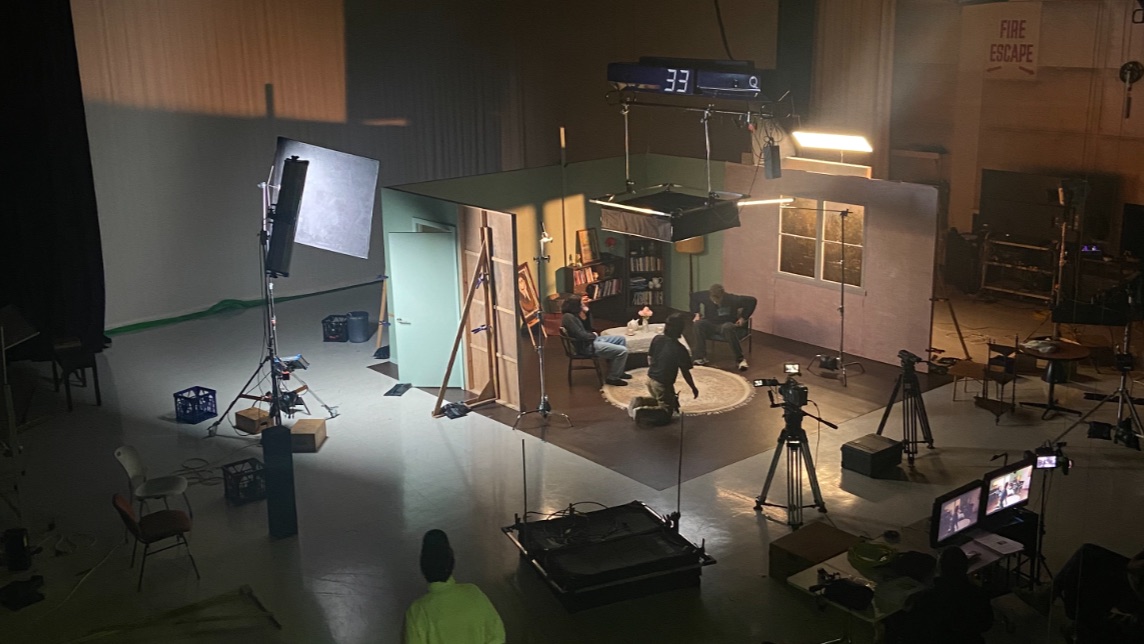
Being successful on set requires the ability to work well with others. Delivering something that will engage and thrill audiences is never the result of any one person, but is always the result of an entire crew working together.
As filmmakers we spend a lot of time talking about the technical and creative aspects of filmmaking, but very little time talking about the human aspects of working together. These human — or “soft” skills — can be the difference between making something good or making something great. And the difference between good and great can be the difference between commercial failure versus success. It’s a wonder to me why we don’t spend more time talking about and teaching human skills like leadership. We’ve all been on sets with crews that don’t play well with each other, as well as sets where the crew comes together like a machine. And I reckon we know that feeling when we have that crew where you feel you can achieve anything and that what you’re making is special.
So what makes a crew come together like this? In broad terms it’s called “culture” and culture is set by the actions and conversations of leaders. Culture is dynamic. It is shaped by the actions and attitudes of everyone on set as they interact with each other. In scientific terms it’s a “complex adaptive system” that adjusts and changes as the individual parts interact with each other. What that means is that the leaders within the system need to constantly monitor and manage the culture in order to ensure that a positive and constructive culture emerges. If you don’t then a culture will emerge regardless. And it’s possible this culture will not be the one you want.
So who are the leaders within this system? Well in a sense it’s everybody. Every individual’s actions affect the whole and every individual has the opportunity to act in a way that sets an example for others. But there are certain roles that have greater power and opportunity to shape culture. And these roles are the ones that therefore have a greater responsibility to be leaders on set. If you’re a head of department then you’re a leader. If you’re the 1st AC then you’re a leader of the other ACs. If you’re the gaffer then you’re a leader of your lighting assistants. If you have any of these roles then I urge you to think more widely than lenses and aspect ratios, and start to think about “how am I being a great leader to my team?”.
In the absence of education in our industry about leadership – how do you be a great leader? A really simple and practical way of improving your leadership skill is to use the idea of “intent” to shape how you communicate with the people around you. Let me explain what I mean.
In 2013 retired US Navy captain David Marquet published the book “Turn the Ship Around!” in which he coined the moniker “Intent Based Leadership”. The story goes like this…
David was the Captain of the submarine USS Olympia when he was transferred to the USS Santa Fe. The Santa Fe was the worst performing submarine in the navy and David was tasked with fixing it. The Santa Fe had “poor morale, poor performance and the worst retention rate in the fleet” (Marquet, n.d.). The problem was that David was an expert on the Olympia, but knew nothing about the Santa Fe. He had 6 months to fix the performance of the Santa Fe’s crew, but there was no way he could learn the submarine and become expert enough to command the crew on what to do.
To solve this problem he got his senior leaders together and asked them what they thought. Their answer was this: “you shut up” (Marquet, 2014). They told him to stop telling them what he wanted them to do, and to start telling them what he wanted them to achieve. That is to communicate his “intent” and to let them use their own expertise to determine what they would do to achieve his intent.
So how would this work on a filmset? Let me give you an example. Imagine you’re the cinematographer talking to your gaffer. You could say: “Get me an Aputure F22C and boom it over the set from behind that bookshelf and set it to 2700K with an intensity of 15%”. Or you could say something like: “I think this scene needs a warm, soft top light – what do you think?” Your gaffer might then reply: “I agree, what would you think about an Aputure F22C boomed over the set from behind that bookshelf, set to 2700K with a starting intensity of 15%?” To which you might reply: “Yeah I think that’ll work”.
Note what has happened here. You as the leader have given the follower intent – “this is what I want to achieve”. The follower has then given you intent back – “this is what I intend to do to achieve your intent”. And then you have given the follower validation – “yes I agree with that course of action”. Or you give them feedback – “actually I think that is too warm”. You give intent, they give intent, you give validation or correction. They then act with confidence knowing their choices are the right ones.
There are several advantages to using intent to lead. The first is that human beings are motivated by having autonomy over their own actions. That is, people work harder when they have control over their own work rather than just going through the motions to do what someone else has told them to do.
The second is that communicating this way allows your crew to bring their own expertise to the activity at hand. You might have a great idea of what should be done in a scene, but one of your crew might have an idea that you haven’t thought of that is even better. When you use the language of intent, you unleash your crew to make suggestions in an orderly way that might just make you look better.
The third advantage is that by unleashing people to make their own decisions and use their own expertise you reduce the cognitive burden of what you have to think about. By using this approach you powerfully delegate aspects of the work to your team to worry about. This allows you to narrow your focus down to a small number of things that only you can sort out. Things like the overall integration of the look from shot to shot, collaborating closely with the director, looking for problems and/or opportunities that you would otherwise not recognise.
When you use intent to lead your focus becomes about integration of all the moving parts together in such a way that the whole is greater than the sum of its parts. You remember that feeling of invincibility we talked about at the start? This is how that happens.
Originally published in Australian Cinematographer Magazine issue 106, September 2025.
More Articles
Oct 5, 2026
Making great decisions fast
Mar 1, 2026
The power of knowing how to work together
Dec 1, 2025
Having hard conversations
© 2019-26 Nick Payne