Having hard conversations
Dec 1, 2025
Nick Payne
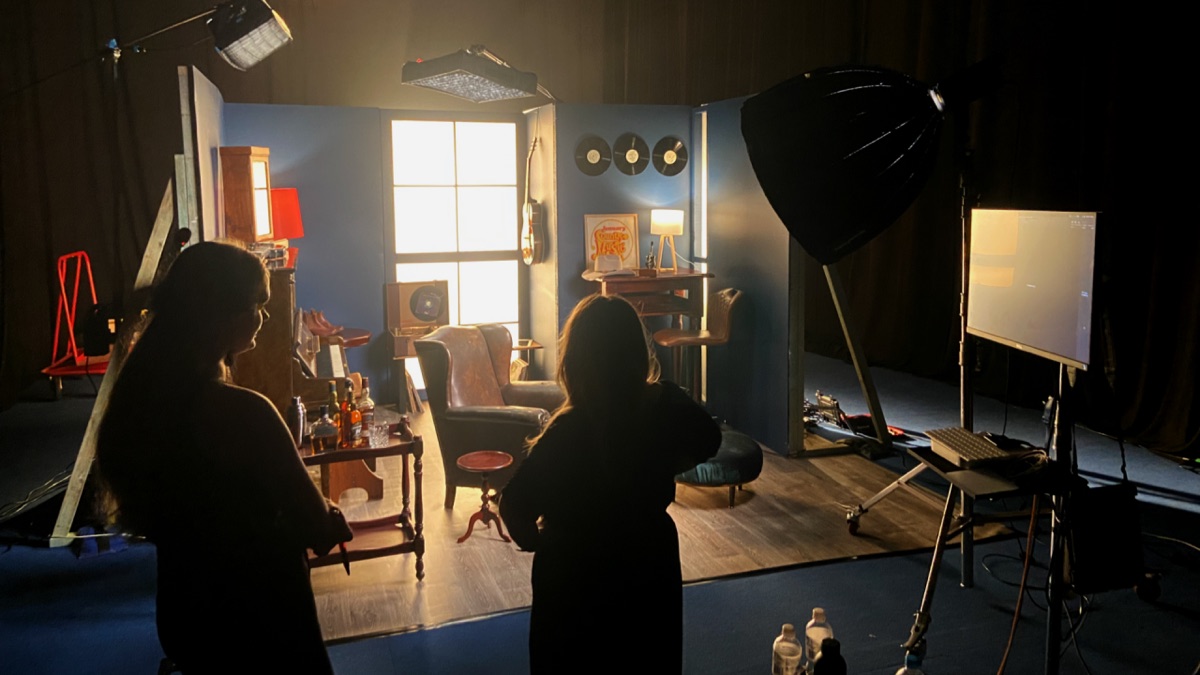
Working on set is complex. Sometimes something goes wrong because of a decision or action of a single person. Fixing that requires a conversation. Sometimes… that is hard.
The first thing making it hard is often you. We’ve been conditioned to avoid conflict and see it as a bad thing. We often have had a bad experience of someone else talking to us and that makes us feel bad about making the same mistakes ourselves. The first thing you’ve got to do is to flip the script in your head and start to think about what you’re about to do as beneficial and the right thing to do for the person you’re talking to.
The story I tell myself is that by having a direct conversation with someone that I am showing them respect. It means I believe they care enough about the work to want to be good at it and that the feedback I can give is valuable. When I change my view it not only makes me less scared of it, but also subtly changes the tone of the conversation to be much more positive, and that shifts the way the other person receives it.
No blame
The next way to make one of these conversations a positive exchange is to externalise the topic away from the person you’re talking to to be about something outside of both of you.
I was working on a set where an exposed card went missing. When I saw a gap in the data wrangling logs I went to the 2nd AC to discuss it. In talking to him I made sure that the words I used were focussed on the problem that needed to be solved and not on blaming him for causing the problem. I could have said, “you’ve lost a card” and that would have created a confrontation where he would have felt the need to defend himself. In doing so the conversation would have become unproductive in resolving the actual problem.
The alternate language to use was to talk about the problem as something we needed to work out together. So words like, “do you know where this missing card might be?” Or, “there’s a card missing, what steps could we try to find out where it went?” The result was a collaborative effort to trace the movements of the card until we found it and all was well. In the aftermath my colleague commented that he appreciated the way I spoke to him and that in the end: “it was just a problem to be solved”.
Behaviours not attitudes
In my previous example the cause of the problem turned out to be something the 2nd AC had done — he’d gotten the card mixed up and put it in with the wrong case. But because we’d worked it through without blame we realised the cause together and he willingly made changes to prevent it occurring again. At no point did I have to confront him and ask him to do anything to fix the problem.
Sometimes, however, you do need to speak directly to someone. In these circumstances it’s best to focus on behaviour and not attitude.
Imagine you’ve got a truck loader who doesn’t respond quickly when you call for a piece of equipment. It would be easy to discuss this in terms of attitude – “you’re slack”, “you don’t care about what we are doing”, “you’re not paying enough attention”. In doing this you’re making a comment about who they are as a person, and when you do that you make them feel unsafe and they move immediately to defend themselves. The alternative is to talk about behaviours. So you could say: “in order for me to do my job well I need for you to always keep an ear out for the radio”, “be ready to get the equipment we need to set straight away”, “have the truck well organised so equipment is at hand”. You can also (if you need) identify the behaviours that you’re seeing that you don’t want to see. For example, “I notice I need to call you on the radio more than once”, “it often takes 10 minutes until a piece of equipment arrives”.
By talking about behaviour you not only address the problem you’re trying to fix, but you give a clear roadmap to that person of what they need to do to be a great performer.
The rest of the time
Finally, giving negative feedback is much easier—and effective—when you spend the rest of your time giving positive feedback. If people are doing a great job – tell them! Then when it comes to a harder conversation they’ll be much more receptive given the trust you’ve already built.
Originally published in Australian Cinematographer Magazine issue 107, December 2025.
More Articles
Oct 5, 2026
Making great decisions fast
Mar 1, 2026
The power of knowing how to work together

Sep 1, 2025
Using “intent” to lead a film crew
© 2019-26 Nick Payne