Making great decisions fast
Oct 5, 2026
Nick Payne
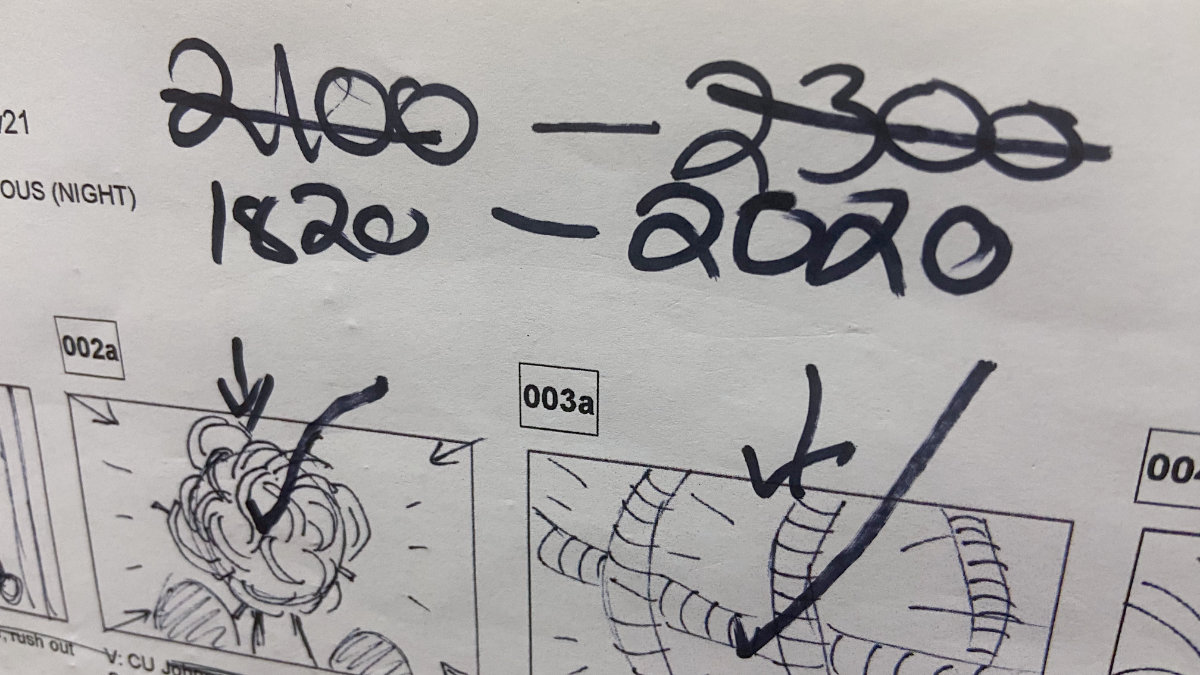
Have you ever watched back something you’ve shot and thought: “I wish I’d done this differently”? Or: “if only I’d had more time I would’ve made a better decision.” On set we are constantly making decisions. Some of these are trivial and some of them shape the final creative outcome. We’re under pressure to make decisions fast, but how do we make decisions that are great?
The secret to great decisions is knowing the ingredients that come together. Great decisions require technical competence, contextual information, and a clear understanding of the creative intent. Decisions exist on a spectrum from simple and obvious to complex and ambiguous. A simple decision can be made quickly by a competent person who knows what’s going on – what color temperature will I set the camera to? A complex decision requires the expertise of a number of experts, access to a greater amount of information, and crystal clear clarity on the creative vision at play – a key piece of grip equipment has been delayed and I need to replan the day around this with the grip, 1st AD, and director. Eric Stolz is not delivering the performance we’re after, should we sack him after a week and recast with Michael J Fox?
Ambiguous decisions need enough time to consider a variety of options – the first option that comes to mind will rarely be the best option.
Information radiators
There’s a ton of documents that are created during pre-production that form contextual information to drive decisions: reference images, storyboards, blocking and coverage diagrams, the schedule for the day. I know DPs that create binders of information that they print out and hand to each of their team members to use as reference. I like to find a wall every day and stick all these things up there. This works to radiate this information widely to everyone on set and inform their individual decisions.
When a complex decision comes up, I stand around the radiator and discuss that decision in the presence of the visualised information. Once the decision has been made, we update the information on the wall accordingly.
The more visible you make information, the better and faster decisions are made. Both by individuals and those collaborating on bigger decisions.
Huddle, timebox, decide
As decisions get more complex you’ll reach a point where grabbing the relevant experts and huddling together will be the fastest way to get to a decision. This avoids a back and forth where you speak to one person, and then speak to another only to unearth new information that sends you back to the first person. Huddling allows information to emerge and be understood by everyone at the same time.
Think of the process like this:
- Describe the problem to solve clearly so everyone knows what we’re trying to decide.
- Share relevant contextual information by asking everyone to contribute.
- Generate options by asking for ideas.
- Debate the options.
- Decide and move on.
With discipline and clarity (especially in the first step) you can do this quickly.
Who decides?
The best answer to this question is “everybody”. A great outcome is when you discuss a decision and everyone unanimously agrees on the answer. Consensus means that everyone is committed to the actions you will now take. But on a fast moving set the time it takes to reach consensus can be too costly. This is where timeboxing comes in.
When you start the huddle, set the maximum amount of time you can afford to spend on this decision – “we’ve got 5 minutes”. If you reach consensus within that time, great. If not, then know who is the person who gets the final say. Let them make the decision. And then move on respecting that that is the decision that has been made.
Who gets the final say?
Decisions on many sets are driven purely by hierarchy – the director decides; or the producer gets the final say. For complex decisions great answers come with the input of a number of people. This allows you to avoid bias. But, to keep things moving the buck needs to stop somewhere when the timebox is up. So who gets the final say?
Great films hold three things with equal importance: a compelling creative vision, keeping costs within anticipated revenue, and the health and safety of everyone involved. These are rightly “owned” by different people to ensure they are given equal weight. The director owns the creative vision, the 1st AD owns the costs on behalf of the producer, and everyone owns safety (and even better a safety officer).
Final say treats all of these things seriously and where necessary brings all three owners together to decide.
Talk about your process – don’t assume
A simple thing you can do when meeting a director for the first time is to ask “how do you like to make decisions on set?” It doesn’t take long, but it’ll save you time later and avoid unnecessary conflict.
Originally published in Australian Cinematographer Magazine issue 109, June 2026.
More Articles
Mar 1, 2026
The power of knowing how to work together
Dec 1, 2025
Having hard conversations
Sep 1, 2025
Using “intent” to lead a film crew
© 2019-26 Nick Payne